Did you know balsamic vinegar is sometimes called 'wine' vinegar? That's because it's made from grapes and the juice is aged in wooden barrels just like wine - the difference being that vinegar is not allowed to ferment. The longer your balsamic is aged, the thicker and sweeter it will be, and yes, the more expensive it will be too.
You'll know a true, traditional style balsamic - or 'tradizionale aceto balsamico' - by the price tag. It's usually well over $100 for one 100ml bottle. That's because it's been barrel-aged for at least 10 years, and sometimes much longer than that. It will be stored in a traditional bulb-shaped bottle, and it's usually stored in its own wooden box. This kind of balsamic is painstakingly created to be valued and savored in special moments. Not necessarily what you'd want for your regular salad dressing.
For whipping up an everyday vinaigrette dressing, you'll want something that's much more affordable, while still maintaining the taste profile of the quality balsamic flavors - that perfect balance of acidity and sweetness.
I'm partial to We Olive's aged balsamic vinegar. It's delicious enough that I can eat it alone on greens and be satisfied. It's a great compromise of excellent flavor and high quality - at a fairly affordable price. Plus it's made here in California, so I can feel good about buying locally.
If you're not sure about the quality of the balsamic vinegars available to you, a decent shortcut is to try a balsamic glaze. Basically, the glaze is a cheap balsamic vinegar, reduced for thickness and sweetness. Be careful of added sugars! But a balsamic glaze is generally inexpensive (easy to DIY, too), and can be used just like the high quality aceto balsamico, without breaking the bank.
Showing posts with label salad. Show all posts
Monday, January 27, 2014
Thursday, January 23, 2014
Eat more salads.
Just a quick post today. I've been running around shopping for a new car - you definitely need one living here in California. And lately I've been craving and throwing together a Greek salad, and it tastes amazing for something that's just a simple twist on your traditional vinaigrette dressing.
For a single salad, start with one freshly chopped garlic clove, and a bit of grainy dijon mustard. Add the juice of half a lemon and a few dashes of white wine vinegar. Throw in about a half a teaspoon of dried oregano. Slowly drizzle in your olive oil and whisk together, tasting until you like the blend.
I threw in some leftover quinoa for protein, greek olives, and feta cheese. It really hit the spot today for lunch - so tasty, quick, and filling.
Monday, January 20, 2014
Eat Happy Mondays - choose good olive oil.
Your choice of olive oil will make or break the quality of the vinaigrette you use it in. It can also have tremendous ramifications for your health. The better quality, and the fresher your olive oil, the better the health benefits you can gain from including it in your diet.
A recent meta-analysis of 18 independent studies showed that conformity to the Mediterranean Diet (high in olive oil) confers consistent protection against cardiovascular diseases, neurodegenerative disorders, cancer, and overall mortality. This is clearly evidence to recommend this lifestyle to anyone who wishes to age in good health while enjoying their food.
The Mediterranean diet is plant-based and full of antioxidant rich foods, which means a high intake of fresh vegetables, fruits, nuts, and olive oil, combined with a moderate intake of fish and alcohol (usually wine), and a low intake of dairy, meat and meat products, and sweets. Basically how I try to eat!
But how your olive oil is made is so important. It's easy to buy a bottle without really knowing what you're getting. If you're in California, you can benefit from local growers and the California Olive Oil Council label, so you can be sure of where your olives were grown and where your oil was made.
Wherever you live, your finest olive oils will be labelled extra-virgin, which means no chemicals or extreme heat were used in the production process. Ideally, the bottle you buy should provide a harvest date and a bottling date so you know how fresh it is - try to buy within 18 months from the harvest at the most, and consume within 30 days of opening for best taste and freshness.
Remember to store your olive oil in a dark bottle, away from light and heat to avoid oxidation and preserve it as long as possible. Want to learn more about olive oil? There's an International Olive Oil School (that has webinars) where you can learn advanced tasting techniques, food pairings, and most importantly, how to know a high quality oil when you taste one. And here's a great quick online guide to tasting olive oils and what to look for.
A recent meta-analysis of 18 independent studies showed that conformity to the Mediterranean Diet (high in olive oil) confers consistent protection against cardiovascular diseases, neurodegenerative disorders, cancer, and overall mortality. This is clearly evidence to recommend this lifestyle to anyone who wishes to age in good health while enjoying their food.
The Mediterranean diet is plant-based and full of antioxidant rich foods, which means a high intake of fresh vegetables, fruits, nuts, and olive oil, combined with a moderate intake of fish and alcohol (usually wine), and a low intake of dairy, meat and meat products, and sweets. Basically how I try to eat!
But how your olive oil is made is so important. It's easy to buy a bottle without really knowing what you're getting. If you're in California, you can benefit from local growers and the California Olive Oil Council label, so you can be sure of where your olives were grown and where your oil was made.
Wherever you live, your finest olive oils will be labelled extra-virgin, which means no chemicals or extreme heat were used in the production process. Ideally, the bottle you buy should provide a harvest date and a bottling date so you know how fresh it is - try to buy within 18 months from the harvest at the most, and consume within 30 days of opening for best taste and freshness.
Monday, January 13, 2014
Eat Happy Mondays - make salads.
Rather than focusing my energy on diets and restricting calories, I try to focus instead on the things I want to eat more of each day, like fresh green salads, lots of fresh vegetables and fruits, vegetarian sources of protein, and healthy fats. My father always made a fresh vinaigrette dressing each time he would make a chopped salad, and I'm so grateful that I got to learn from him. It's an easy way to add some more delicious to your everyday.
A vinaigrette is basically just an emulsion of of vinegar and oil. The golden ratio is about 1 part vinegar to 2 or 3 parts oil - but always adjusting to taste. Mix it up in a small bowl (best if it has steep sides) using a fork or a small whisk. The taste is going to depend So MUCH on what type of vinegar, and what type of oil you're using. Stay tuned for future posts on vinegars and oils, and how to know what to buy.
I like to start with my vinegar element - whether it's a balsamic, an apple cider vinegar, or lemon juice. Gently drizzle in your olive oil, whisking all the while, until your dressing starts to come together. And don't be afraid to adjust your dressing to suit your taste. So, as your mixing the dressing, taste it by dipping in a piece of lettuce so you'll see how well your flavors blend. No licking the fork!
If you're using a vinegar that's sweet enough, you won't need to add any sweetener. If you're using lemon juice or something else that's a bit tart, you might want to add a bit of honey to sweeten it up. Keep adjusting until you find the blend you like.
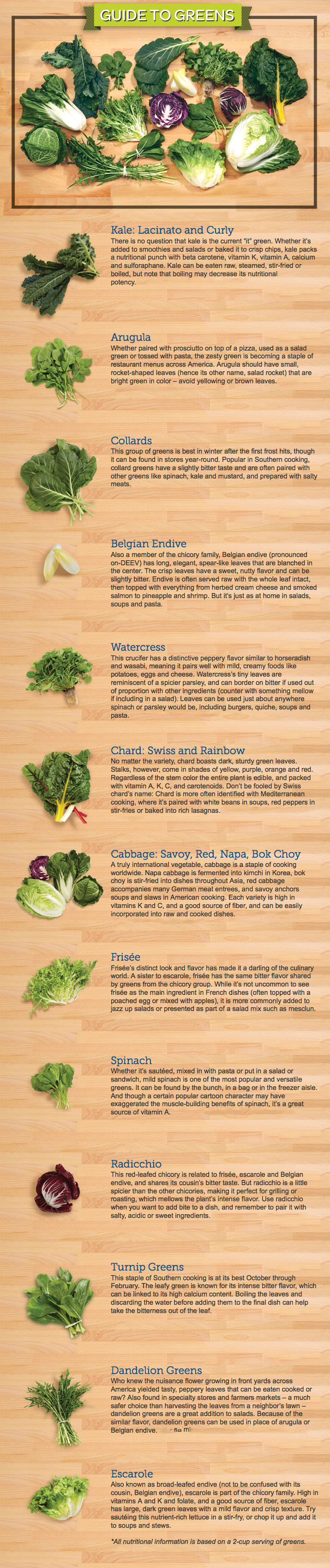
You'll notice that you might want a slightly sweeter dressing if you're using a peppery green like arugula, cress, or mizuna, or maybe something with a bright, citrusy taste if you're using a more bitter green like frisee, raddichio, or kale. Mix it up and try different combinations to find what you like best. (Not sure about different types of greens? This is a great infographic that will help sort things out).
My favorite part of making fresh dressing when you make a salad is that you can so easily customize it depending on your mood and what ingredients you have on hand. Use freshly squeezed lemon juice instead of vinegar. Add crushed fresh garlic or chopped fresh herbs. Try a tahini or miso-based dressing for a totally different flavor and texture. Whisk in some grainy mustard to help thicken it up and add another dimension of flavor. It's a great way to change it up on a regular basis, even if you're eating from the same salad greens, day after day.
A vinaigrette is basically just an emulsion of of vinegar and oil. The golden ratio is about 1 part vinegar to 2 or 3 parts oil - but always adjusting to taste. Mix it up in a small bowl (best if it has steep sides) using a fork or a small whisk. The taste is going to depend So MUCH on what type of vinegar, and what type of oil you're using. Stay tuned for future posts on vinegars and oils, and how to know what to buy.
I like to start with my vinegar element - whether it's a balsamic, an apple cider vinegar, or lemon juice. Gently drizzle in your olive oil, whisking all the while, until your dressing starts to come together. And don't be afraid to adjust your dressing to suit your taste. So, as your mixing the dressing, taste it by dipping in a piece of lettuce so you'll see how well your flavors blend. No licking the fork!
If you're using a vinegar that's sweet enough, you won't need to add any sweetener. If you're using lemon juice or something else that's a bit tart, you might want to add a bit of honey to sweeten it up. Keep adjusting until you find the blend you like.
You'll notice that you might want a slightly sweeter dressing if you're using a peppery green like arugula, cress, or mizuna, or maybe something with a bright, citrusy taste if you're using a more bitter green like frisee, raddichio, or kale. Mix it up and try different combinations to find what you like best. (Not sure about different types of greens? This is a great infographic that will help sort things out).
My favorite part of making fresh dressing when you make a salad is that you can so easily customize it depending on your mood and what ingredients you have on hand. Use freshly squeezed lemon juice instead of vinegar. Add crushed fresh garlic or chopped fresh herbs. Try a tahini or miso-based dressing for a totally different flavor and texture. Whisk in some grainy mustard to help thicken it up and add another dimension of flavor. It's a great way to change it up on a regular basis, even if you're eating from the same salad greens, day after day.
Friday, January 10, 2014
Happy Friday.
I have a lazy weekend planned, filled with lounging in the California sunshine, catching up on some work, and cooking. I bought a beautiful orange cauliflower at the farmers market yesterday, and I'm debating whether to try something new.
Generally, I just roast cauliflower, because it gets this sweet, creamy delicious flavor, and it's super simple with just a bit of olive oil, salt and pepper. But I'm considering trying something a little different this time.
I'm fascinated by this idea of a whole roasted tandoori cauliflower - I've got everything but cardamom in my spices. This would definitely be outside of my cooking comfort zone, and I like a good challenge. I think it's good to go outside the lines every once in a while.
I'm consistently blown away by how much better all the fruits and veggies are than what I had gotten used to in New York. I'm so grateful to be here in California. The fresh and local lifestyle is definitely - so far - the #1 most amazing part of living here :)
Generally, I just roast cauliflower, because it gets this sweet, creamy delicious flavor, and it's super simple with just a bit of olive oil, salt and pepper. But I'm considering trying something a little different this time.
I'm a huge salad fan, and I like to throw quinoa in at every opportunity, so of course I love this beautiful Roasted Cauliflower, Chickpea and Quinoa salad. This is definitely something I can see myself throwing together - delicious, easy, with multiple layers of texture and flavor.
From My New Roots
I'm fascinated by this idea of a whole roasted tandoori cauliflower - I've got everything but cardamom in my spices. This would definitely be outside of my cooking comfort zone, and I like a good challenge. I think it's good to go outside the lines every once in a while.
I'm consistently blown away by how much better all the fruits and veggies are than what I had gotten used to in New York. I'm so grateful to be here in California. The fresh and local lifestyle is definitely - so far - the #1 most amazing part of living here :)
Subscribe to:
Comments (Atom)